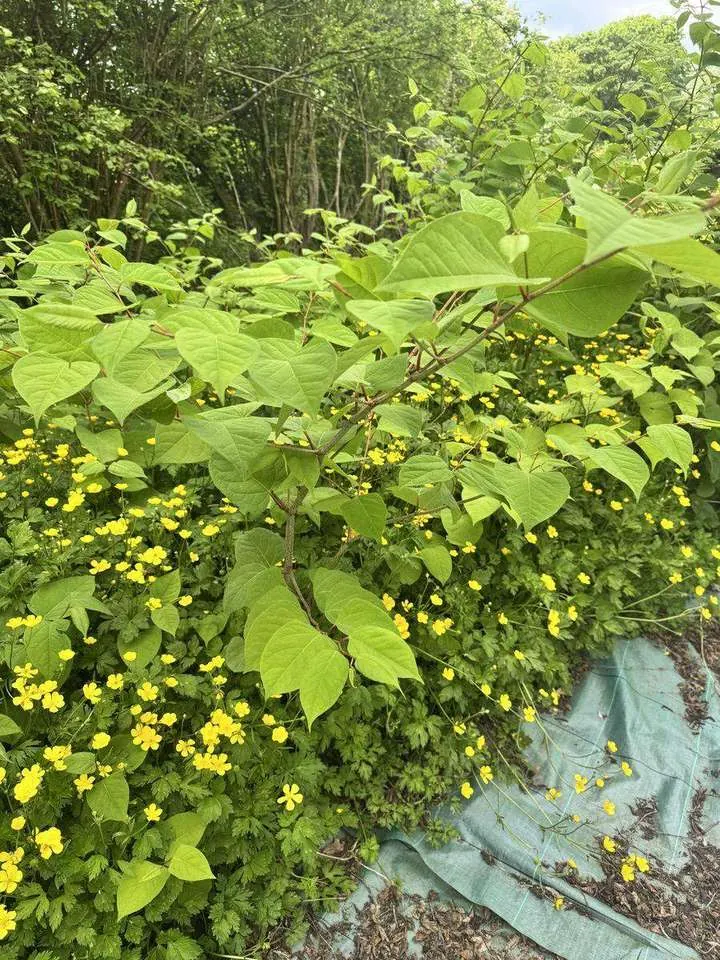
Free 60-second checker
Is it Japanese knotweed?
Four quick questions, based on the three-feature test our surveyors use. You’ll get an honest answer — and if there’s any doubt, a specialist will identify it from your photos for free.
The three-feature test: if a plant has hollow, purple-speckled stems, alternating shield-shaped leaves with a flat base, and dies back completely in winter, it is almost certainly Japanese knotweed.
Not sure? Send us a photo and a specialist will identify it for free.
How the checker works
The three-feature test
Plenty of plants share one or two of knotweed’s features. No common look-alike has all three at once.
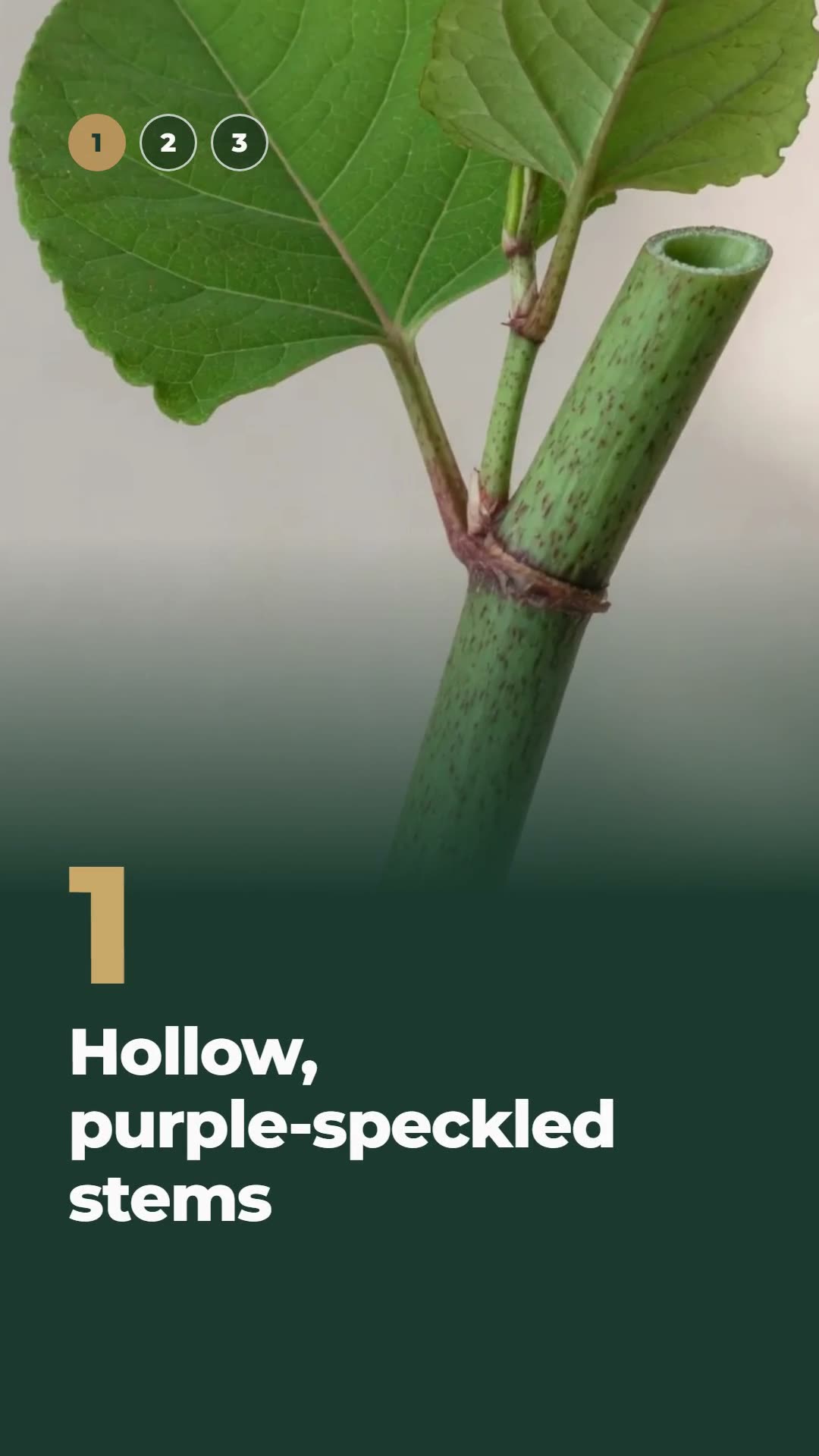
Feature 1
Hollow, speckled stems
Bamboo-like canes, hollow between the joints, green with purple or red speckles. They die back to brittle brown canes in winter.
Feature 2
Shield-shaped, alternating leaves
Broad leaves with a flat base and pointed tip, one per joint, alternating side to side so the stem zig-zags.
Feature 3
Complete winter die-back
All the leaves die off in autumn. Evergreens such as bamboo keep their leaves, which rules them out.
Watch: the test in 35 seconds
A quick walk through all three features, ready to check against the plant in front of you. Captions available.
Common look-alikes
Plants most often mistaken for knotweed
| Plant | Why it gets confused | How to tell it apart |
|---|---|---|
| Bamboo | Hollow, jointed canes in dense stands | Evergreen, with long narrow leaves and no purple speckling |
| Russian vine | Same plant family, heart-shaped leaves | Climbs and twines over supports; knotweed stands on its own |
| Bindweed | Arrow or heart-shaped leaves, vigorous | Thin twining stems and large white trumpet flowers |
| Dogwood, lilac, buddleia | Similar height and leafy habit | Leaves grow in opposite pairs on solid, woody stems |
| Himalayan honeysuckle | Hollow stems, upright growth | Opposite, lance-shaped leaves and drooping purple-and-white flowers |
| Bohemian knotweed | A hybrid that looks almost identical | Treated exactly the same as Japanese knotweed for legal and management purposes |
Still not sure what you’re looking at?
Send us a photo. A specialist will identify the plant within one working day — free, and with no obligation.