Giant Hogweed Removal
Safe, professional removal of this dangerous Schedule 9 species by specialist PPE-equipped teams. Full compliance documentation and site monitoring included.
What Is Giant Hogweed?
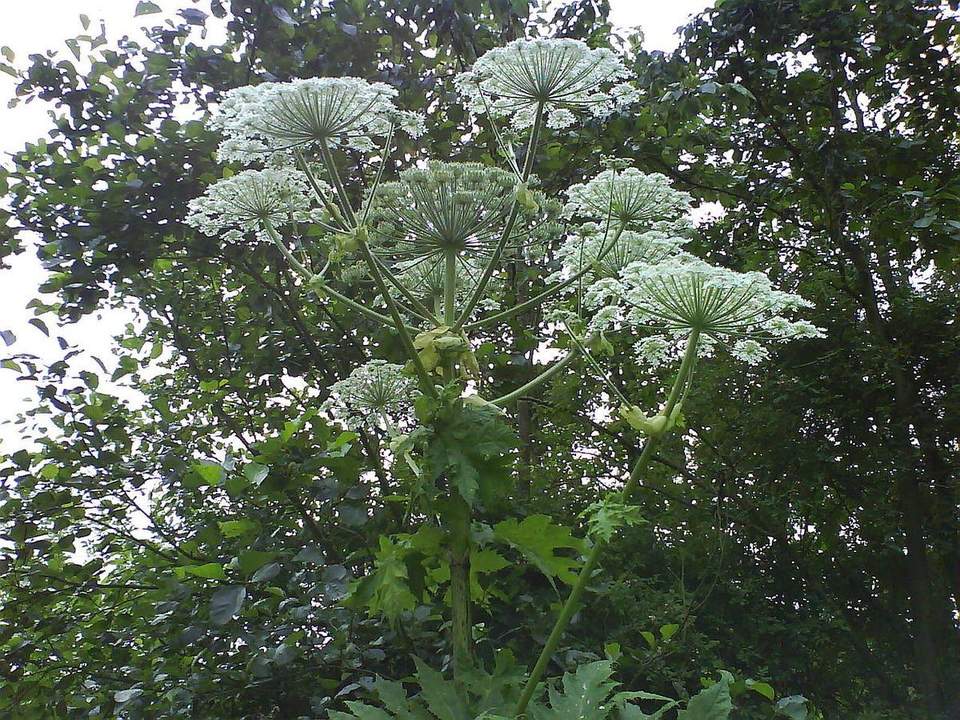
Giant hogweed (Heracleum mantegazzianum) is a large, invasive non-native plant that poses a serious and direct risk to human health. Originally introduced to the UK from the Caucasus region as a Victorian garden curiosity, it has since escaped cultivation and established itself along riverbanks, canal towpaths, roadsides, waste ground and in public open spaces across the country. The plant is visually striking, growing up to five metres tall with broad, deeply lobed leaves spanning over a metre and large umbrella-shaped flower heads that can reach 80 centimetres in diameter.
The danger of giant hogweed lies in its sap, which contains toxic chemicals called furanocoumarins. When the sap comes into contact with skin and is then exposed to sunlight, it causes a severe phototoxic reaction known as phytophotodermatitis. This results in painful blistering, burns that can be third-degree in severity, and long-lasting skin discolouration that may persist for years. Contact with the eyes can cause temporary or permanent blindness. Children are particularly at risk due to their natural curiosity and thinner skin. This is not a plant that should be approached without proper protection, and amateur removal attempts are strongly discouraged.
Giant hogweed is listed on Schedule 9 of the Wildlife and Countryside Act 1981, making it an offence to plant it or cause it to grow in the wild. Landowners and occupiers have a legal duty of care to manage hogweed on their property, particularly where it poses a risk to public health. At Fortis Ecology, our specialist teams are trained and equipped to handle giant hogweed safely, using full PPE including chemical-resistant coveralls, face shields and gauntlets. We carry out all work in strict compliance with health and safety regulations and ensure that all plant material is disposed of through licensed waste carriers.
Early identification and prompt professional intervention are essential. Giant hogweed produces up to 50,000 seeds per plant, which can remain viable in the soil for up to 15 years. Without a sustained management programme, a single plant can establish a dense colony that becomes increasingly difficult and costly to control. Our treatment programmes are designed to address both the visible plants and the seed bank, ensuring long-term eradication rather than simply cutting back the current season's growth.
What's Included
- Specialist risk assessment of the infestation and surrounding area
- Treatment by a PPE-equipped, trained specialist team
- Herbicide application or excavation removal, as appropriate
- Schedule 9 compliant disposal of all plant material via licensed waste carrier
- Site monitoring visits to manage regrowth and seed bank germination
- Comprehensive health and safety documentation
- Written report with photographic evidence and compliance records
Species Focus: Giant Hogweed
- Scientific name: Heracleum mantegazzianum
- Identification: Grows up to 5 metres tall; thick, hollow stems with dark reddish-purple blotches; deeply lobed leaves up to 1.5 metres wide; large white umbrella-shaped flower heads
- Health risks: Sap causes severe phytophotodermatitis (blistering burns) on contact with skin followed by UV exposure; potential for permanent scarring and blindness
- Growth pattern: Biennial or perennial; produces a massive tap root and can generate up to 50,000 seeds per plant
- Legal status: Schedule 9 of the Wildlife and Countryside Act 1981; controlled waste requiring licensed disposal
Our 4-Step Removal Process
-
1. Risk Assessment & Site Preparation
Our specialist surveyor assesses the site, maps the extent of the hogweed infestation and evaluates risks to site users, neighbours and the public. We establish exclusion zones, erect warning signage where necessary and prepare a detailed health and safety method statement for the works.
-
2. Safe Treatment
Our PPE-equipped team carries out treatment using the most appropriate method for the site. Herbicide application is effective for established colonies, whilst excavation may be preferred where rapid clearance is required or where the site is near watercourses. All work is conducted in accordance with COSHH regulations and our internal safe systems of work.
-
3. Compliant Disposal
All hogweed plant material, contaminated soil and PPE waste is removed from site and disposed of through a licensed waste carrier in full compliance with Schedule 9 requirements and the Environmental Protection Act 1990. We provide complete waste transfer documentation for your records.
-
4. Monitoring & Follow-Up
Given the longevity of the hogweed seed bank, ongoing monitoring is essential. We schedule follow-up visits to identify and treat any seedling regrowth, ensuring the site progresses towards full eradication. We provide updated reports after each monitoring visit so you have a clear record of progress.
Frequently Asked Questions
Is giant hogweed dangerous?
Yes, giant hogweed is considered one of the most dangerous plants in the UK. Its sap contains furanocoumarins that cause a severe phototoxic skin reaction when exposed to sunlight. This can result in painful blistering, burns that may require hospital treatment, and long-lasting skin discolouration. Contact with the eyes can cause temporary or permanent vision impairment. We strongly advise against attempting to remove or handle giant hogweed without professional training and appropriate protective equipment.
How is it safely removed?
Professional removal requires specialist PPE including chemical-resistant coveralls, face shields, gauntlets and rubber boots. Our technicians apply targeted herbicide treatments to the foliage and cut stems, or excavate the root system where immediate clearance is needed. All contaminated material is bagged, removed from site and disposed of via licensed waste carriers. We follow strict COSHH protocols and never carry out hogweed work in conditions that could endanger our team or the public.
How long until the site is clear?
The visible plants can be eliminated within the first treatment season, but the seed bank in the soil can produce new seedlings for up to 15 years. A realistic management programme typically spans three to five years, with monitoring visits to catch and treat any new germination. We design each programme to achieve progressive control, with the vast majority of sites showing significant improvement after the first full season of treatment.
What about seeds in the soil?
Giant hogweed seeds can remain viable in the soil for up to 15 years, which is why a single treatment is rarely sufficient. Our management programmes include regular monitoring visits specifically to identify and treat seedlings before they mature and produce new seeds. Over successive seasons, the seed bank is gradually exhausted. We also advise on site management practices that help prevent recontamination, such as controlling soil movement and monitoring boundary areas.