Himalayan Balsam Control
Targeted management of one of the UK’s most rapidly spreading invasive plants
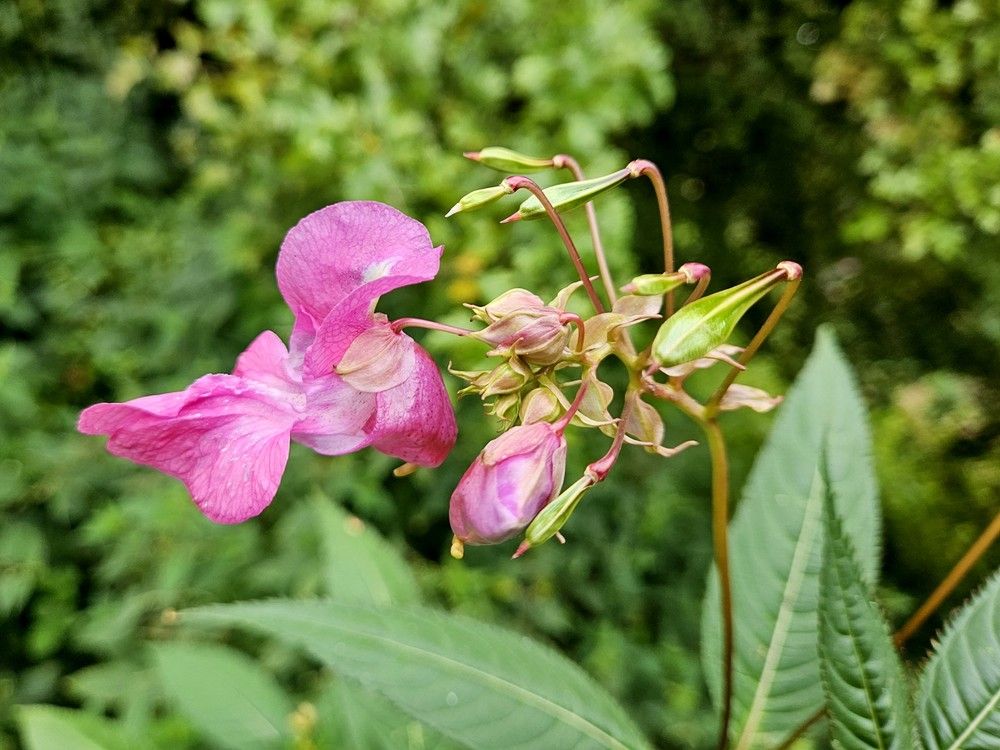
Understanding Himalayan Balsam
Himalayan balsam (Impatiens glandulifera) is a tall, fast-growing annual plant originally introduced to the UK as a garden ornamental in 1839. It has since escaped cultivation and become one of the most widespread invasive species in Britain, colonising riverbanks, woodland margins, damp meadows and waste ground with alarming speed. Each plant can produce up to 800 seeds, and its explosive seed pods can scatter them several metres from the parent plant—making containment extremely challenging without professional intervention.
You can identify Himalayan balsam by its distinctive pink to purple helmet-shaped flowers, which bloom from June through to October. The plant typically grows between one and three metres tall, with reddish-green stems that are hollow and succulent. Its leaves are lance-shaped with serrated edges, arranged in opposite pairs or whorls of three. During autumn, the seed pods ripen and burst open at the slightest touch, propelling seeds across a wide area and into watercourses where they are carried further downstream.
Himalayan balsam is listed under Schedule 9 of the Wildlife and Countryside Act 1981, which makes it an offence to plant or otherwise cause this species to grow in the wild. Landowners have a duty of care to prevent its spread, and failure to manage established colonies can result in enforcement action, particularly on sites adjacent to watercourses or conservation areas. Beyond its legal status, the plant causes genuine ecological harm: it outcompetes native flora for light and pollinators, reduces biodiversity along riverbanks, and leaves soil bare over winter once the annual plants die back—accelerating erosion and increasing flood risk.
Why Professional Control Matters
Himalayan balsam may appear straightforward to manage because it is an annual plant with shallow roots, but its prolific seed production and the viability of its seed bank make DIY efforts surprisingly ineffective. Seeds can remain viable in the soil for up to two years, meaning a single missed season allows the population to regenerate in full. Effective control requires a coordinated, multi-year programme that targets both standing plants and the seed bank—precisely the approach our PCA-accredited teams deliver.
Professional management also ensures compliance with environmental legislation. Work near watercourses, for example, may require Environment Agency consent, and herbicide application in or near water demands specialist training and authorisation. Fortis Ecology holds all necessary consents and certifications, so you can be confident that every aspect of the programme is legally compliant and environmentally responsible.
Our Control Methods
- Hand pulling before seed set — The most effective mechanical method, carried out between April and early June before flowering begins. Plants are pulled from the base, ensuring the root is removed, and left on site to desiccate.
- Targeted herbicide application — For larger infestations or areas where hand pulling is impractical, we apply approved herbicides using precision methods that minimise impact on surrounding vegetation. All herbicide work is carried out by NPTC-certified operatives.
- Managed grazing — On suitable sites, we can coordinate with conservation grazing schemes to suppress regrowth naturally, particularly in riparian meadow settings.
- Seed bank management — Our programmes extend across multiple growing seasons to exhaust the soil seed bank, with monitoring visits to identify and treat any regrowth before plants reach maturity.
Timing Is Everything
The critical window for Himalayan balsam control runs from early spring through to June, before the plants begin to flower and set seed. Treatment carried out after seed dispersal begins (typically July onwards) risks spreading the problem rather than solving it. Our programmes are carefully scheduled to align with the plant’s growth cycle, ensuring maximum impact from each intervention. We recommend contacting us as early as possible in the season so we can plan your programme around the optimal treatment windows.
Species Covered
- Himalayan balsam (Impatiens glandulifera) — Pink to purple flowers, explosive seed pods, hollow reddish stems, typically found along watercourses and damp ground
- Other balsam species — We also manage orange balsam (Impatiens capensis) and small balsam (Impatiens parviflora) where present on site
Our Four-Step Process
Survey
We visit your site to map the extent of the infestation, identify access constraints and assess proximity to watercourses or sensitive habitats.
Plan
A bespoke management plan is prepared detailing the control methods, treatment schedule, required consents and a fixed-price quotation with no hidden costs.
Treat
Our trained operatives carry out the programme using Schedule 9 compliant methods, with all waste managed and disposed of through licensed facilities.
Monitor
Follow-up visits over subsequent growing seasons confirm eradication and address any regrowth from the residual seed bank, with full compliance documentation provided.
Frequently Asked Questions
When is the best time to treat Himalayan balsam?
The ideal treatment window is between April and early June, before the plants flower and produce seeds. Hand pulling is most effective during this period because the plants are large enough to identify but have not yet developed viable seed pods. Herbicide application can extend slightly later into the season where necessary, but all treatment should be completed well before the August–October seed dispersal period to prevent further spread.
How quickly does Himalayan balsam spread?
Extremely quickly. A single plant produces up to 800 seeds, and its explosive seed pods can project them up to seven metres. Along watercourses, seeds are carried downstream and can colonise new areas several kilometres from the original infestation within a single season. Without intervention, a small patch can dominate an entire riverbank corridor in just two to three years.
Can I remove Himalayan balsam myself?
Small patches on private land can be hand-pulled by the landowner, provided you do so before flowering and dispose of the material responsibly. However, for anything more than a handful of plants, professional management is strongly recommended. Incomplete removal often worsens the problem by disturbing the seed bank, and work near watercourses may require regulatory consents that only licensed operators can obtain. As a Schedule 9 species, causing or allowing it to spread carries legal liability.
How many treatments are needed?
Most sites require a minimum of two to three years of treatment to fully exhaust the soil seed bank. While standing plants are removed in the first season, seeds already in the ground can germinate the following year. Our programmes include monitoring visits across multiple growing seasons to catch and treat any regrowth, ensuring complete eradication. The precise duration depends on the size and density of the infestation, which we assess during the initial survey.